Description
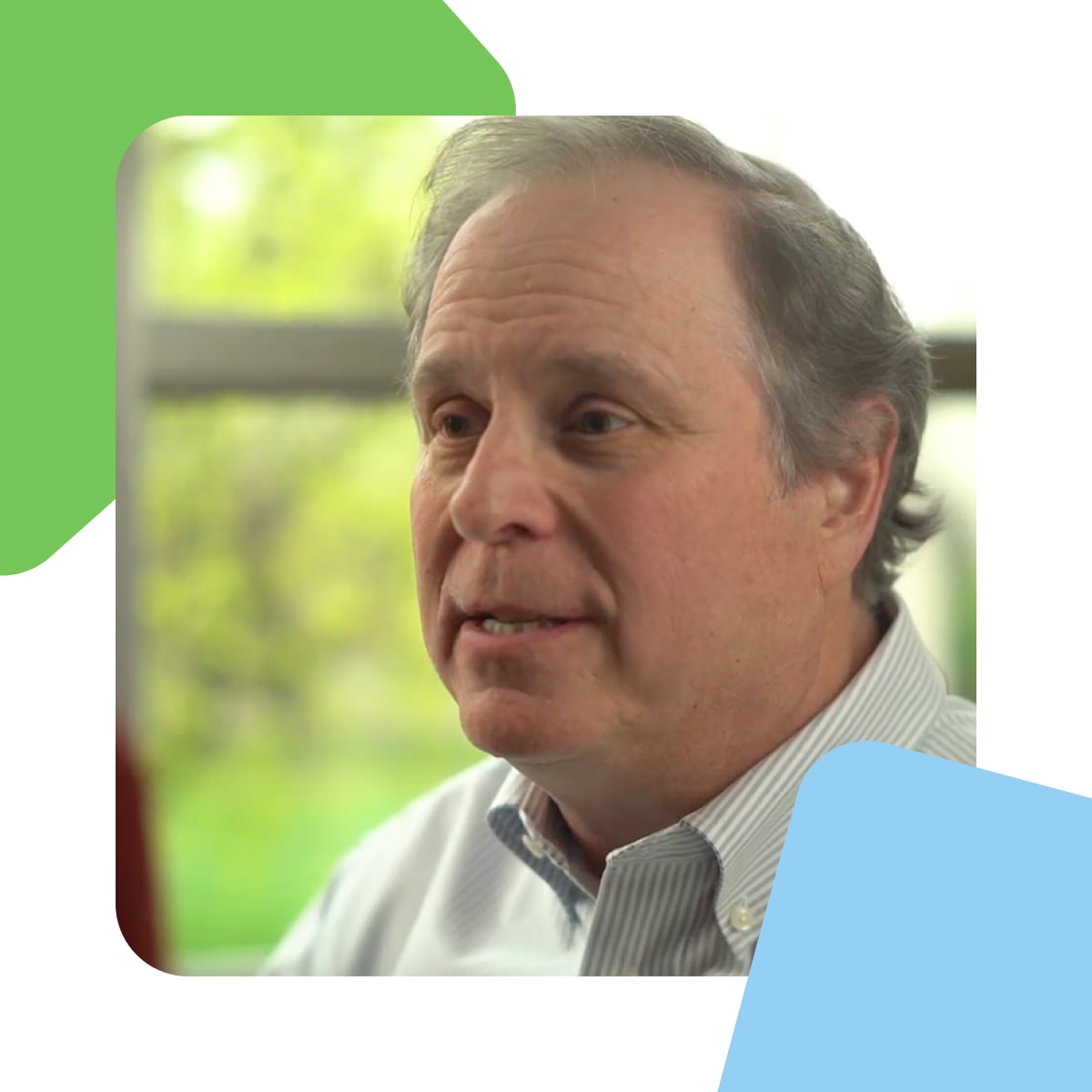
In this episode of Making Therapy Better, Dr. Bruce Wampold speaks with psychiatrist and researcher Natalia Mota about a rapidly emerging field with major clinical implications: computational psychiatry.
Bruce opens by revisiting the long-standing tension between clinical judgment and statistical prediction, tracing it back to Paul Meehl’s landmark work and Daniel Kahneman’s insights about confidence versus accuracy. From there, the conversation moves into Natalia’s core contribution: using natural language processing and graph theory to quantify patterns in speech that clinicians often sense intuitively—especially in cases involving formal thought disorder.
Natalia explains how she represents language as speech graphs (words as nodes, sequences as directed edges) to measure connectedness, fragmentation, repetition cycles, and complexity. This approach enabled her team to distinguish—using early narratives like dream reports and emotionally cued storytelling—between clinical trajectories that later converged on schizophrenia versus bipolar disorder, with high sensitivity and specificity. Importantly, the discussion highlights why this work differs from “black box” AI: interpretability matters, and predictions must be anchored in psychopathology—not confounded social variables.
The episode also explores a crucial caution: language is shaped by education, literacy, development, culture, and socioeconomic context. Natalia shares findings showing that narrative complexity correlates strongly with formal education in typical populations, and discusses how severe symptoms can override expected developmental gains. The conversation expands beyond psychosis into related applications, including research on aging and Alzheimer’s disease, where different memory systems appear to drive changes in narrative connectedness.
The episode concludes with a broader reflection on today’s youth mental health landscape: rising rates of psychological distress, the role of social context and technology, and why we should think like epidemiologists and public health professionals—protecting the school and social environment, keeping the human in the loop, and avoiding premature pathologization.
Similar episodes
-
Season 3 Episode 6: "Belonging As Treatment: The Power of Group Therapy" - Cheri Marmarosh, Ph.D
With Cheri Marmarosh, PhD -
Season 3 Episode 5: "The Changing Landscape of Mental Health Services" - Mark Olfson, MD, MPH
With Mark Olfson, MD, MPH -

Season 3 Episode 3: "Better Therapist Training & Supervision" with Louis Castonguay, Ph.D.
With Louis Castonguay, Ph.D -

Season 2 Episode 8: "How Can AI Help Improve Therapy?" with Zac Imel, PhD
With Zac Imel, PhD -

Season 2 Episode 7: "Closing the Global Mental Healthcare Gap" with Daisy Singla, PhD
With Daisy Singla, PhD -
Season 2 Episode 6: "Can Psychosis be Treated with Therapy?" with Michael Garrett, MD
With Michael Garrett, MD -
Season 2 Episode 5: "What is a Mental Disorder?" with Jerome Wakefield, PhD
With Jerome Wakefield, PhD -

Season 2 Episode 4: "Psychoanalytic Diagnosis and Supervision" with Nancy McWilliams, PhD
With Nancy McWilliams, PhD -

Season 2 Episode 3: "Depression and Psychedelic Therapy" with Charles Raison, MD.
With Charles Raison MD. -

Season 2 Episode 2: "Treating Depression" with Steve Hollon, PhD
With Steve Hollon, PhD -

Season 2 Episode 1: "The Evolution of Depression" with Ed Hagen, PhD
With Ed Hagen, PhD -

Episode 12: "Technology and Mental Health Care" with Barrett Griffith, Maureen Hart, PhD and Geoff Gray, PhD
With Barrett Griffith, Maureen Hart, PhD and Geoff Gray, PhD -

Episode 11: "Alliance Rupture and Repair" with Catherine Eubanks, PhD
With Catherine Eubanks, PhD -

Episode 10: "The Problem with Clinical Trials" with Jonathan Shedler, PhD
With Jonathan Shedler, PhD -

Episode 9: "Primary Care Integration" with Ed Jones, PhD
With Ed Jones, PhD -

Episode 8: "What is Empathy?" with Terri Moyer, PhD and Bill Miller, PhD
With Terri Moyer, PhD and Bill Miller, PhD -

Episode 7: "The Power of Professional Humility" with Helene Nissen-Lie, PhD
With Helene Nissen-Lie, PhD -
Episode 6: "Tracking Outcomes in Community Mental Health" with Robbie-Babins Wagner, PhD
With Robbie-Babins Wagner, PhD -

Episode 5: "Case Formulation and Flexibility" with George Silberschatz, PhD
With George Silberschatz, PhD -

Episode 4: "Multicultural Therapy" with Dr. Jesse Owen
With Dr. Jesse Owen -

Episode 3: “Improving Systems of Care” with Michael Barkham, PhD and Jaime Delgadillo, PhD
With Michael Barkham, PhD and Jaime Delgadillo, PhD -

Episode 2: "Measurement-Based Care and Deliberate Practice" with Scott D. Miller, PhD
With Scott D. Miller, PhD -
Episode 1: "The Future of Psychotherapy" with John Norcross, PhD, ABPP
With John Norcross, PhD, ABPP